What is Mock Trial?
At its most basic level, mock trial is a trial simulation where you perform the role of a trial attorney or a testifying witness.
Each season begins in August when AMTA — the American Mock Trial Association — releases the annual case packet: 300+ pages of witness affidavits, exhibits, and legal materials for a hypothetical court case.
At IU Indianapolis, there are three ways to get involved with Mock Trial:
-
The student organization is open to any IU Indianapolis student — no experience, audition, or application required. Just show up to a practice.
Regular practices: Tuesdays & Thursdays, 4:00–7:00 p.m., Cavanaugh Hall
First practice: Tuesday, August 25, 2026 - CA 227
More details here: https://thespot.indianapolis.iu.edu/organization/indymock
Dues are set and governed by the student executive board. Contact IndyMock@gmail.com for current dues information or to get connected before the semester starts.
-
Mock Trial is offered for academic credit as POLS-Y 351: Mock Trial (Political Simulations) — a 1-credit, in-person course meeting Tuesdays 4:30–5:30 p.m. in CA 227 (Cavanaugh Hall) starting August 24, 2026.
The course is taught by Professor Sydney Kadinger and can be taken up to three times for a maximum of 3 credits.
Enroll through the standard course registration process.
-
IU Indianapolis has one registered AMTA team. Rostered members compete in invitational tournaments throughout the fall and winter before advancing to Regional competition in February. The top teams from Regionals earn a bid to the Opening Round Championship Series (ORCS), with the strongest programs ultimately competing at the National Championship Tournament.
Auditions: September 8 & 10 — complete the Interest Form to request an audition packet!
Roster: After auditions, coaches will select 6-10 students. In past seasons, students who didn't initially make the roster have earned their spot by outperforming rostered members at practice, scrimmages, or competitions.
Eligibility note: AMTA competition is open to current undergraduates who have not enrolled in law school, with some additional categories for early graduates and accelerated program students. See AMTA Rule 3.6 for full eligibility requirements.

What’s the time commitment?
Mock Trial is what you make of it. There's no single right way to participate. Some students drop in to practice when their schedule allows, others pour themselves into every aspect of trial preparation. The more you put in, the more you get out. Time commitment varies depending on your level of involvement:
-
Flexible: you do not need to attend the entire practice block to join the organization.
Come when you can, stay as long as you're able.
Practices run Tuesdays & Thursdays, 4:00–7:00 p.m.
-
As an enrolled student, attendance is governed by the course syllabus. The course meets Tuesdays 4:30–5:30 p.m.
-
AMTA Roster competitors invest anywhere from 10–20 hours per week during the season.
At a minimum, expect 4-6 hours of team practice per week + individual or partner work outside of practice time
Tournament weekends require travel and an overnight stay (see below)
You do not need to be enrolled in the class to join the AMTA roster
Mock Trial Competitions
Before Regionals the team typically travels to 2–4 invitational tournaments hosted by other universities.
Most tournaments follow the same structure:
FRIDAY
Friday is a travel day — the team drives to the tournament location, checks in, and usually spends the evening running material.
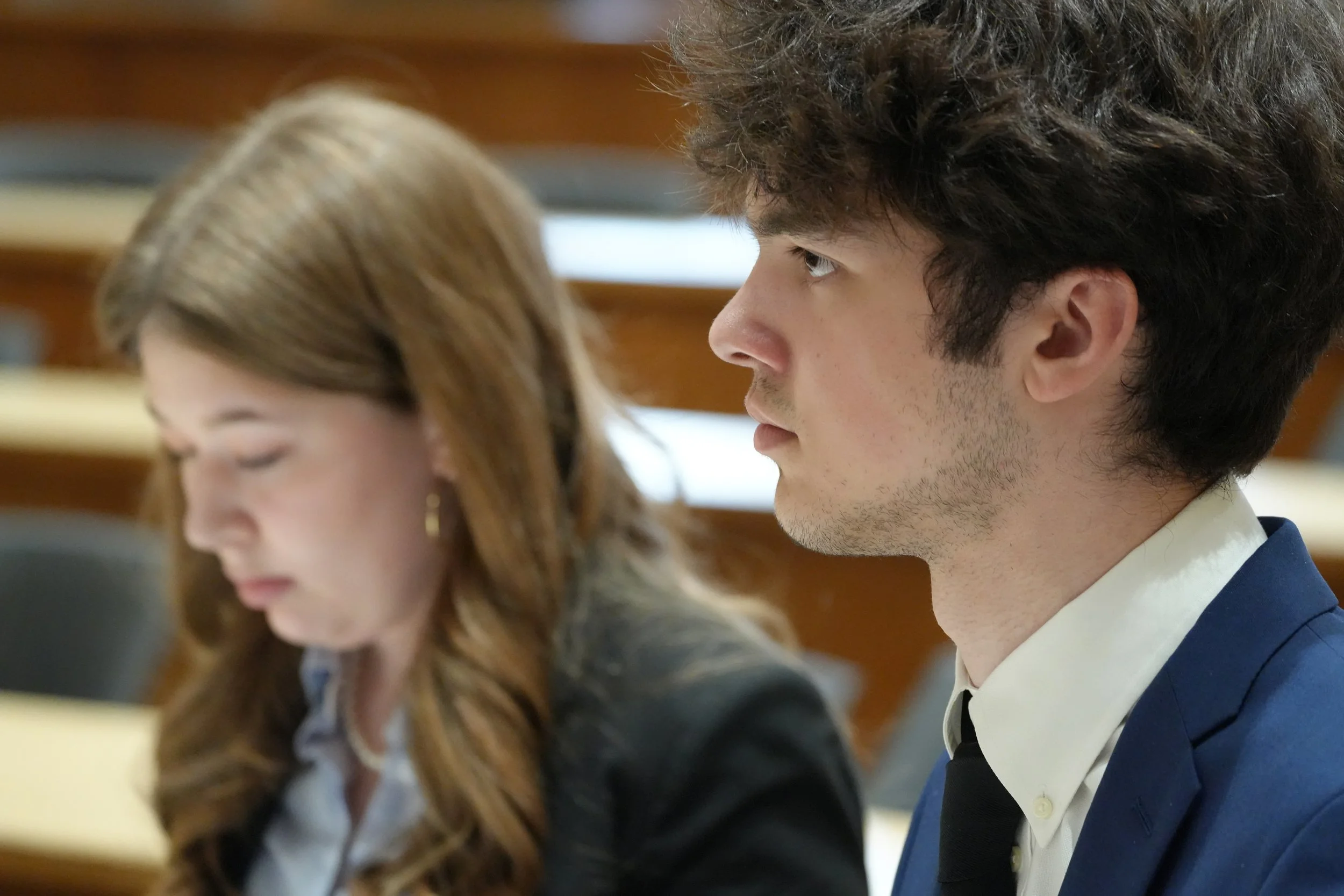
SATURDAY
Saturday includes two rounds of competition. In the morning round, the team argues one side of the case; in the afternoon round, they argue the other. Each round is against a different university.
After competition wraps, the team eats dinner and goes back to the hotel to practice for Day 2!
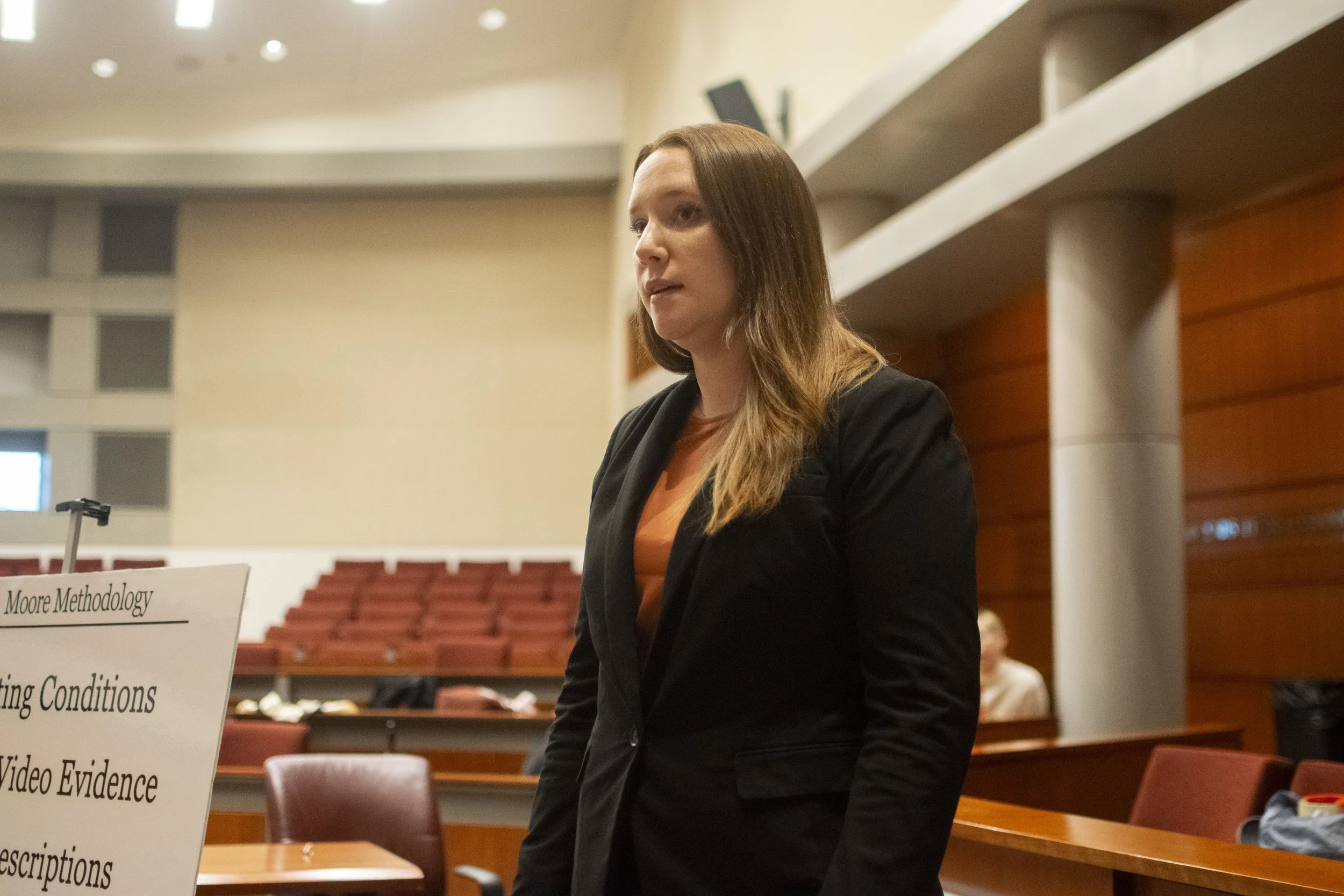
SUNDAY
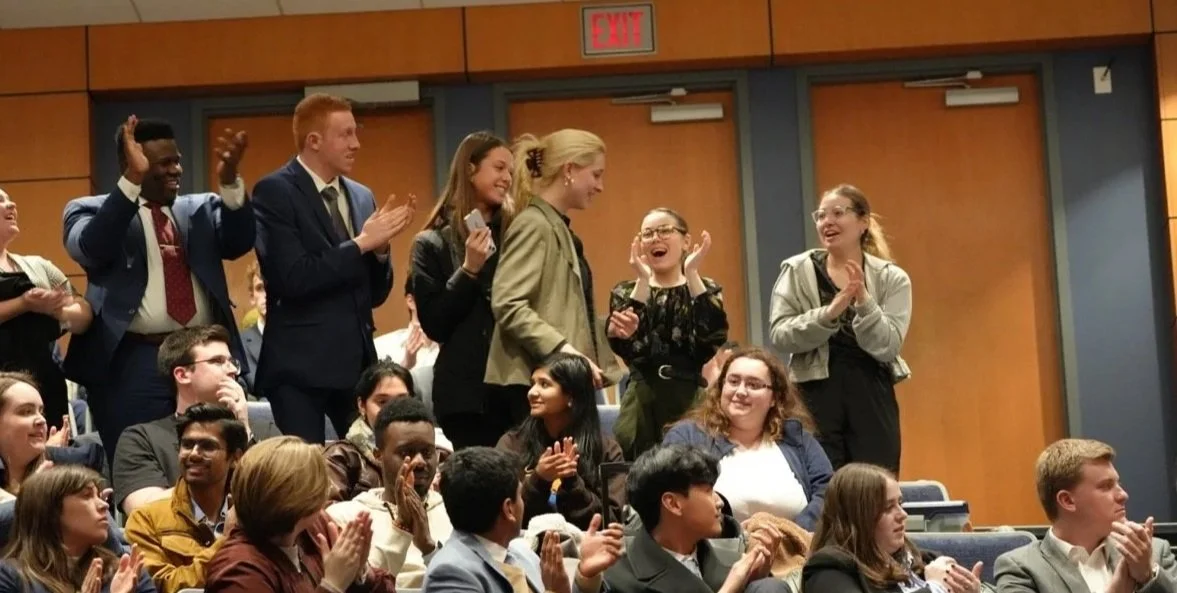
Sunday includes two more rounds of competition, following the same format as Saturday.
After the final round, judges tally ballots and closing ceremonies are held — including team awards and individual Outstanding Attorney and Outstanding Witness recognition. The team heads home after ceremonies conclude.
The Competition Team
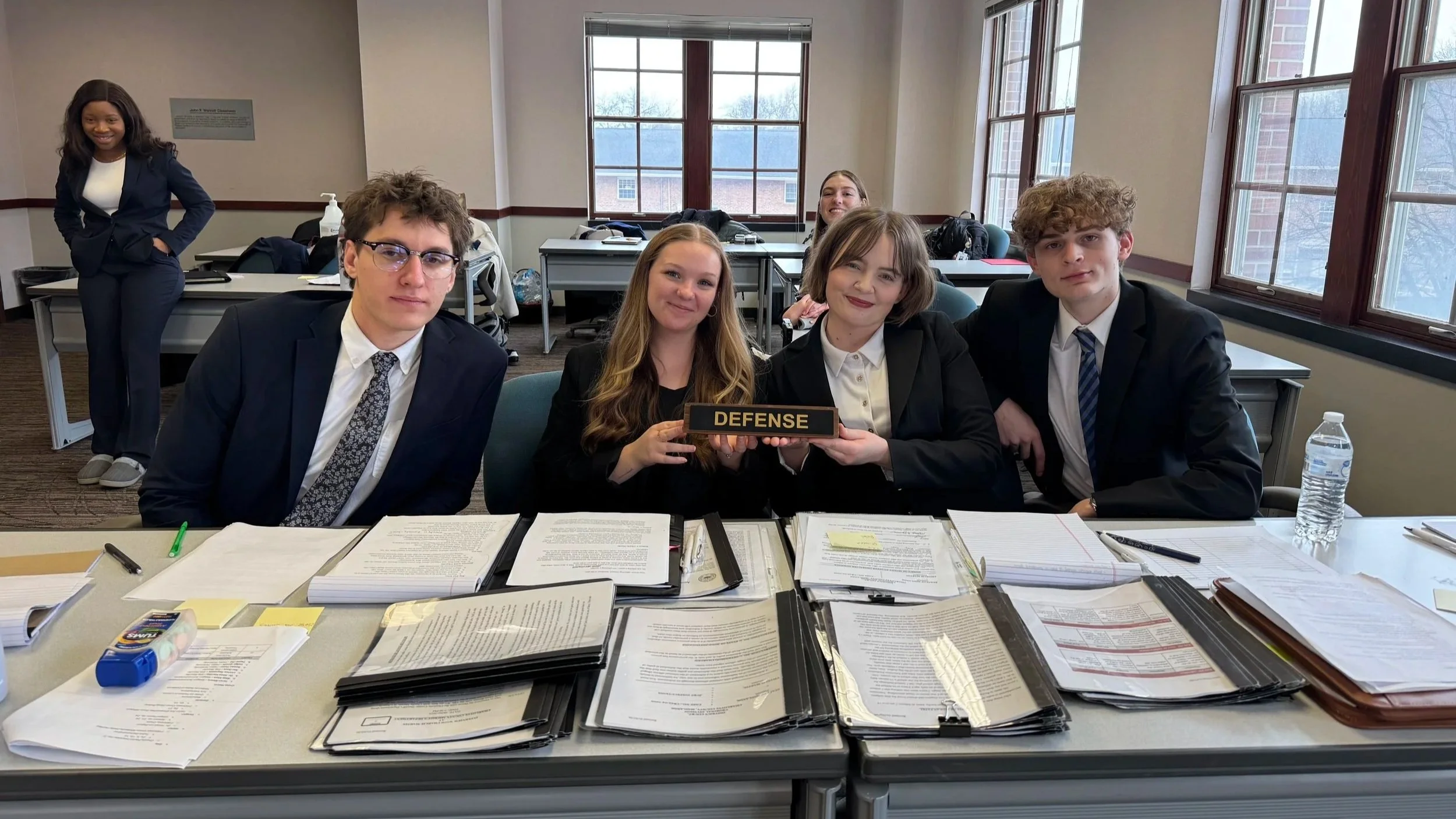
The AMTA Roster consists of 6–10 students.
The roster placements are decided by the coaching staff, after auditions and considering all relevant performances.
Because every round requires 3 attorneys and 3 witnesses per side, some team members will perform in multiple roles across a tournament — a student might serve as a prosecution attorney in one round and a defense witness in another.
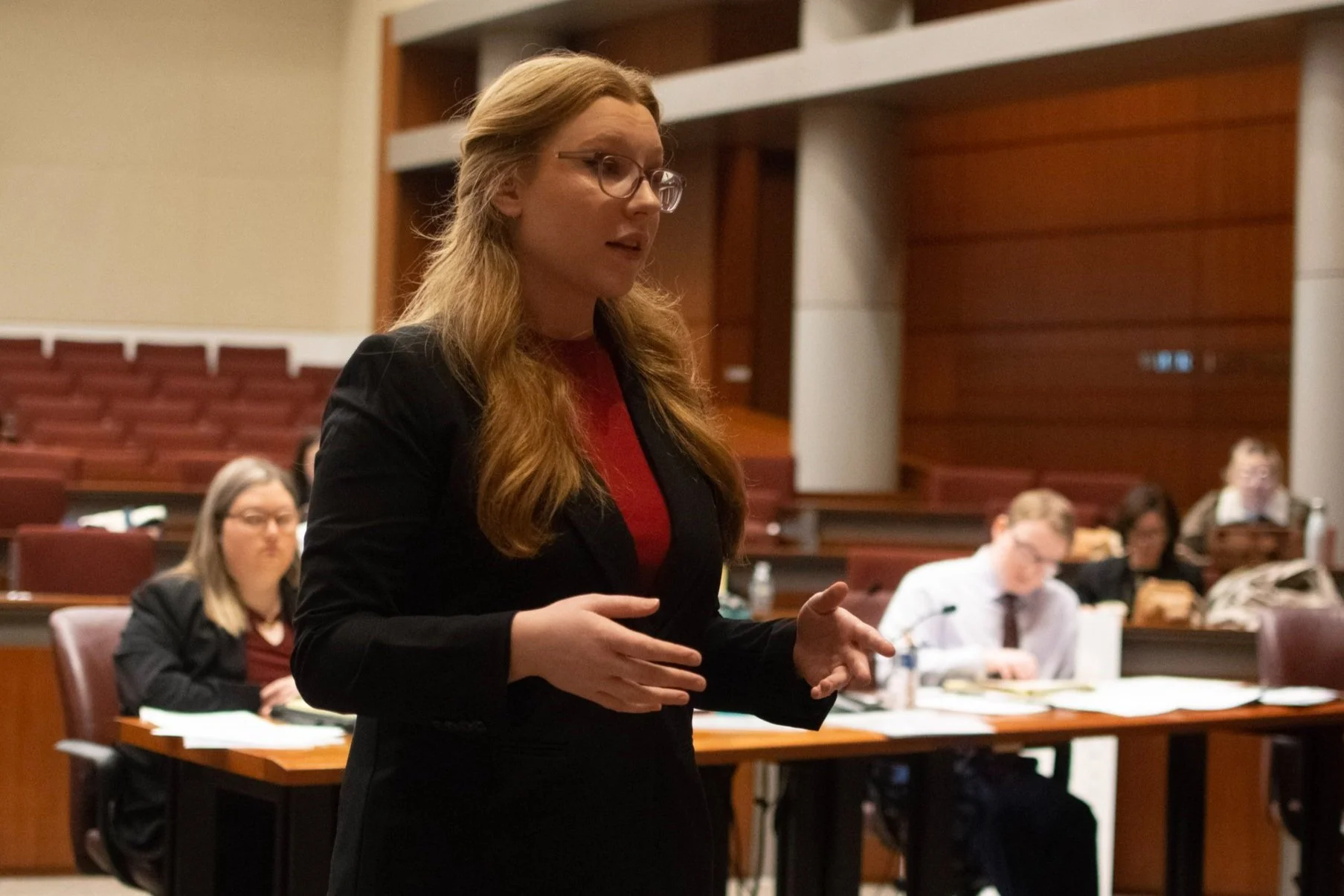
Attorneys
Student attorneys:
Conduct direct and cross examinations of witnesses,
Make and respond to objections under a modified version of the Federal Rules of Evidence, and, may,
Deliver an opening statement or closing argument.
Attorneys must think on their feet - every round is different depending on how witnesses perform, how opposing counsel approaches the case, and how the judge rules during trial.
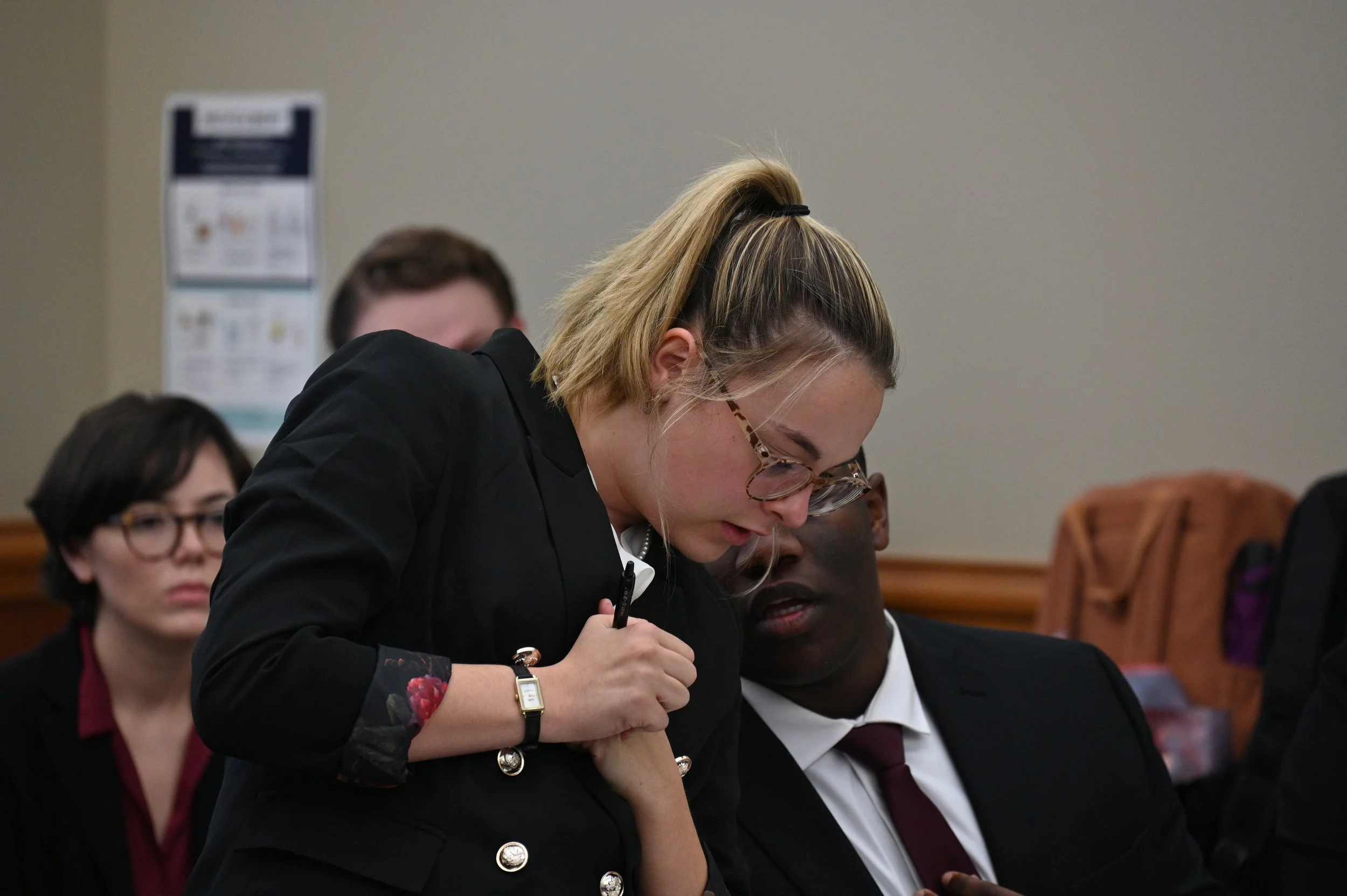
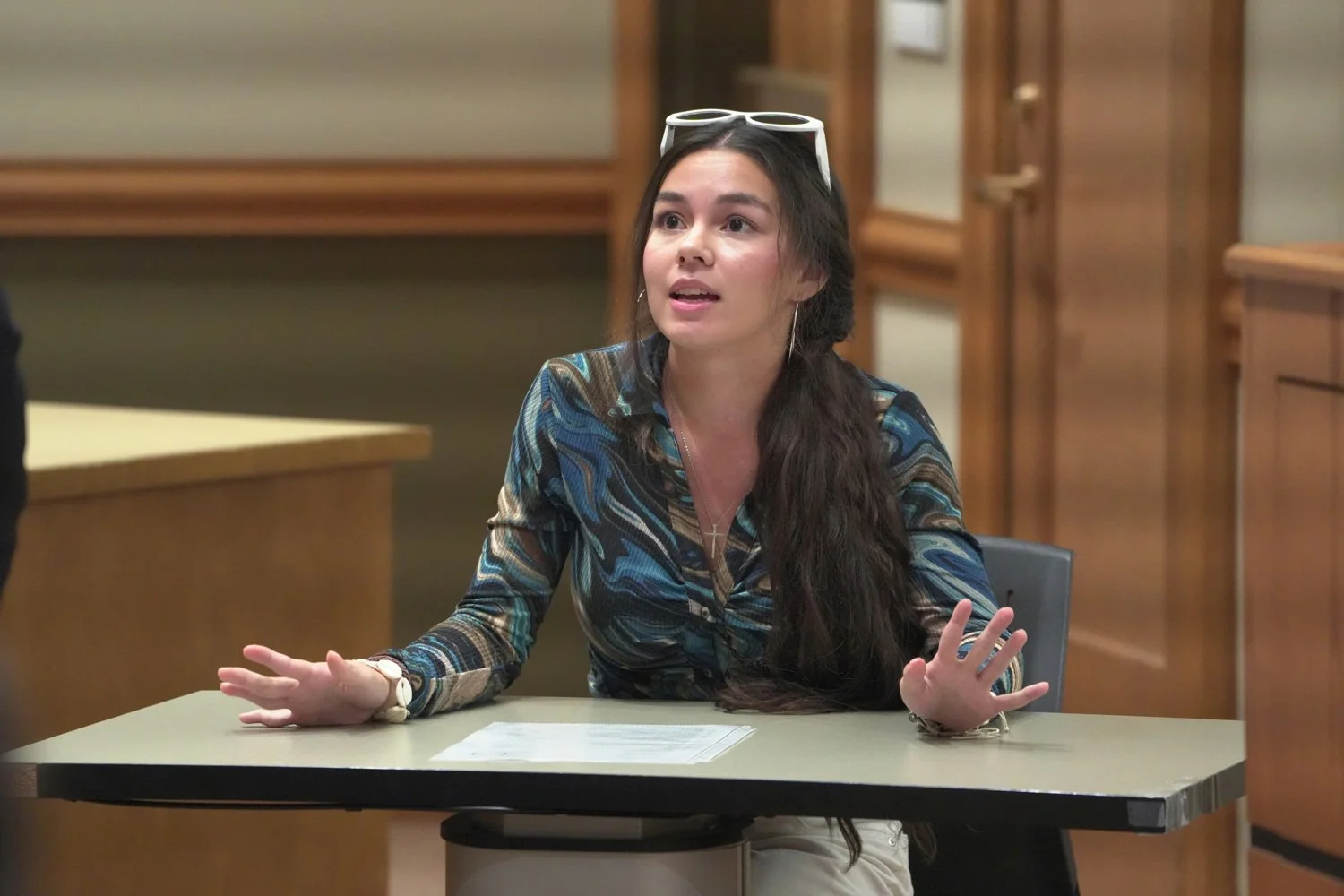
Witnesses
Student witnesses perform as a character within the case packet. During trial, witnesses respond to questions during direct and cross examination.
Witness roles fall into two camps:
“Experts” (think: forensic analysts, medical examiners, law enforcement)
“Character” Witnesses (past seasons have featured a tarot card reader, an eccentric billionaire accused of stealing millions in art from a charity gala, and a 14 year old who witnessed an attempted murder).
Witnesses must stay within their affidavits while bringing their character to life under pressure.
The Ballot: